
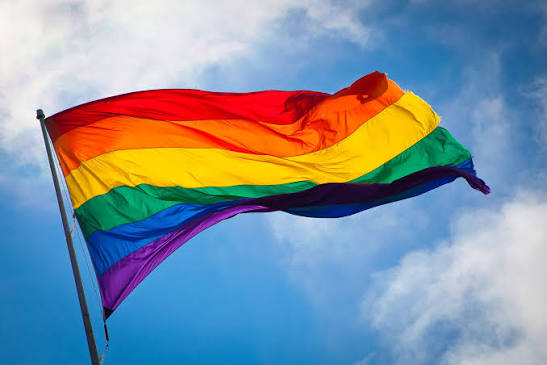
Homophobia and negative attitudes towards homosexuals are not new to society. Social attitudes towards homosexuality have changed a lot over time. Today, many countries have taken steps to recognize the rights of LGBTIQ+ people and give them equal rights.
However, even today, some individuals and groups still consider homosexuality unacceptable or “abnormal”. Various factors can contribute to such negative attitudes, such as religious beliefs, cultural norms, family expectations, social pressure, and a lack of understanding of the experiences of LGBTQ+ people.
But here another important question arises. What influences the formation of strong attitudes against homosexuality? Are such attitudes always based solely on social, cultural, or religious beliefs? Or are they sometimes also influenced by a person’s internal psychological experiences?
Social Pressure and Internal Conflict
A person who grows up in a society or family environment that views homosexuality as wrong may experience internal conflict when they discover that they have same-sex attraction. On one side, they have their own feelings. On the other side, they have religious, social, or family beliefs that they have believed in since childhood. When these two conflict, it can be difficult to accept their own feelings.
For example, if someone who strongly believes that “homosexuality is wrong” feels that they have same-sex attraction, they may try to deny or suppress that feeling rather than accept it.
In psychology, this type of behavior has been explained by a concept called “Reaction Formation.” Simply put, when a person has a feeling that they find it difficult to accept, they may behave in a way that is completely opposite to that feeling.
Accordingly, researchers have studied whether a person who cannot accept their same-sex attraction may show behaviors such as speaking out strongly against it or showing strong hostility toward homosexual people.
What does research reveal?
In a 2012 study published in the Journal of Personality and Social Psychology, researchers looked at whether there was a difference between what people said about their sexual identity and what they might have hidden sexual attraction to. The study involved four studies involving university students in Germany and the United States.
The researchers used a variety of methods to measure not only how people said they were heterosexual, but also their unconscious sexual attraction. They also asked about their family environment and the behavior of their parents.
In the studies, the researchers reported that some participants who said they were heterosexual but had hidden same-sex attraction, had more negative attitudes and hostile behaviors toward homosexuals. They also showed that people who grew up in a highly controlling and non-accepting family environment had a greater gap between their stated sexual identity and their hidden attraction.
Scientific American reports on this research that a person who is conflicted about their own sexual attraction may perceive other homosexuals as a threat to them and therefore show strong opposition to them.
Does this apply to everyone?
No. This is a very important point. Just because someone speaks out against homosexuality does not mean that he or she has a hidden homosexual attraction.
Therefore, it is not scientifically accurate to simply conclude that “all people with homophobia are actually hidden homosexuals.”
So what can we understand?
Research shows that there is no single cause of homophobia. Various factors such as society, religion, culture, family, influences, political agendas and the person’s own psychological experiences can affect it.
For some people, a conflict between their own sexual feelings and the social or religious beliefs they have been taught can be an important factor. But it is not the only explanation for homophobia.
Ultimately, this research reminds us that hatred or strong opposition to homosexuality is not simply a person’s personal opinion, but also needs to be understood in relation to the social and political environment in which he or she lives, family influences, beliefs, and sometimes internal conflicts with oneself.
And there is another thing we need to be careful about when talking about this issue: in combating homophobia, not only homosexual people, but also people who live with conflicts and social pressures about their sexuality, need acceptance, understanding, and a safe environment.